He is almost thirteen.
His voice hasn’t changed, his sweet baby cheeks betray any hint of manhood, and there’s barely a trace of fuzz above his upper lip.
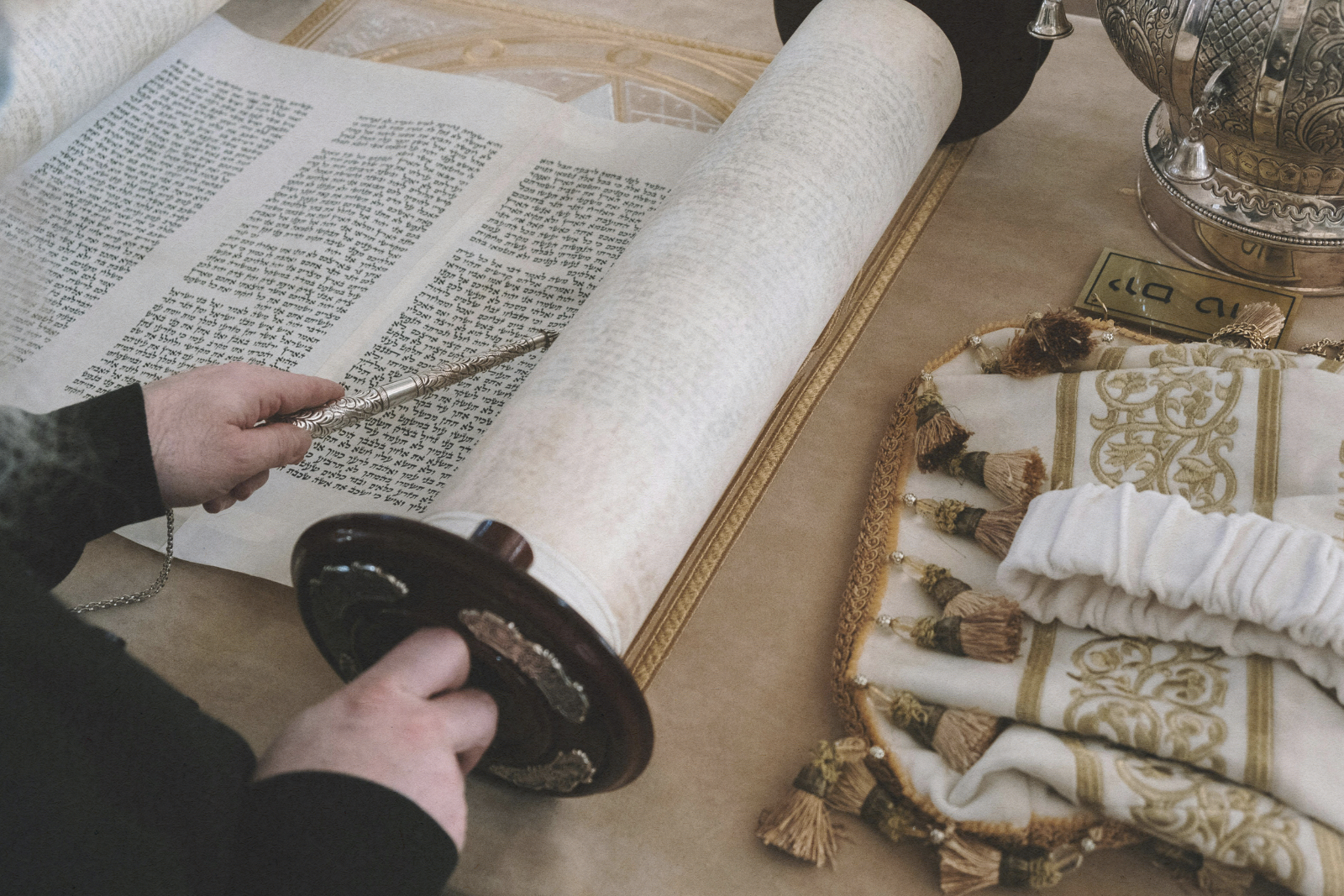
And yet, according to Jewish tradition, when he steps onto the bimah in just a few weeks and begins chanting Hebrew words that have been passed down for generations, he will become a bar mitzvah, marking his entry into adulthood.
My son will stand in the same synagogue where I became a bat mitzvah more than three decades ago, reading from the same Torah, surrounded by the same sense of history and community that shaped me. And despite his innocence, he will become a son of the commandments — responsible for his actions and accountable to something larger than himself.
It is a threshold moment.
It’s a moment to honor where he has been, yes, but also a moment to speak to the future. A moment to quietly offer the lessons and values I hope take root as he stands on the precipice between childhood and the life he will soon begin shaping for himself.
But what do you say to a child becoming a man in this world? A world that feels loud, divided, and, so often these days, painfully unkind? How do you guide a young person toward adulthood when the loudest voices dominating public discourse model the very opposite of what you hope for your child?
This is the tension I sit with as his bar mitzvah approaches.
And this is what I hope he carries with him.
1. Be the Kind of Leader the World Actually Needs
Leadership today — at least what we’re shown when we turn on a screen — seems more about winning than listening, more about being heard than truly hearing others. Somewhere along the way, we began elevating volume over wisdom. Again and again, disagreement devolves into disrespect, and empathy is treated as a flaw rather than a strength.
I don’t want that for my son. I don’t want him shaped by this loudness, and I certainly don’t want him hardened by it.
More than any accolade or accomplishment, I want him to grow into a man who leads with integrity — someone guided not by ego, but by a clear sense of right and wrong, and the courage to act accordingly, even when it’s uncomfortable. I hope he becomes a man who listens deeply, knowing there are always two sides to every story, and who treats people with dignity, even in disagreement.
This is what I’m trying to help him learn now, in the thick of middle school — as he navigates growing up, shifting friendships, and the complicated social dynamics that come with it.
Real strength is principled, not loud.
And it is desperately needed.
2. Tell the Truth — Even When It's Hard
One of the most important lessons I hope he takes with him is this:
Never give people a reason to doubt your word
Being honest is always better than being right. Always. I hope that becomes his personal trademark — not because it’s easy, but because it’s nonnegotiable. I hope that when he speaks, people know his words are grounded in honor, transparency, and a deep respect for the truth.
We are living in a moment that rewards half-truths, hot takes, and carefully curated personas that don’t always match real life. In this world, honesty isn’t just admirable. It’s rare. And trust, once broken, is almost impossible to fully repair.
He will make mistakes. Of course he will. But I hope he learns early that credibility isn’t built on perfection; it’s built on consistency. On telling the truth even when it’s uncomfortable. On owning missteps instead of hiding them. Most importantly, credibility is built on choosing honesty over approval.
Say what you mean.
Keep your promises.
Mean the words you use.
Those habits will carry him farther than any shortcut ever could.
3. Slow Down
Kids today are growing up in a world dominated by instant gratification. Smartphones. DoorDash. AI.
Life has been designed to give us whatever we want the moment we want it. Answers arrive before we finish typing our questions. Purchases arrive in hours. Convenience is everywhere — but meaningful living often feels harder to access.
As my son navigates adolescence, I hope he learns the quiet magic of slowing down.
I hope he comes to understand that some of the most profound learning happens in the not yet. That the waiting, the wondering, the muddling through — this is where growth happens and identity is shaped.
He doesn’t need to fill every quiet moment.
He doesn’t need to distract himself from uncertainty.
Stillness isn’t something to fear. It’s where wisdom forms — where clarity, intention, and self-trust are forged.
4. Practice Empathy
If I could stitch one lesson — one hope — into the fabric of who he is as he steps onto the bimah, it would be this:
Empathy is not a weakness. It is a strength.
Yes, I hope he is smart.
Yes, I hope he is resilient.
But more than anything, I hope he never loses his capacity to feel deeply and love fiercely.
I hope he becomes someone who truly sees people — who makes them feel understood, valued, and safe. Someone who moves through the world with kindness, even when it isn’t rewarded.
Empathy doesn’t mean agreement.
It doesn’t mean softness.
It doesn’t mean avoiding conflict.
It means responding to the world with humanity.
It means leading by example.
It means choosing compassion when it would be easier not to.
Empathy is an act of courage. And I hope it becomes the foundation of his adulthood.
5. Listen Inward
The world is filled with noise, and it’s only getting louder. Opinions, expectations, pressures — they come from every direction, competing for attention. But instincts are different. They don’t demand or perform. They are quiet and steady. They whisper rather than shout.
I hope he learns to block out the noise and pay attention to those whispers.
To check in with his own moral compass.
To make choices not from fear or comparison, but from clarity and groundedness.
His gut will always tell him who he is — and who he is not — more clearly than any outside voice. I hope he has the courage to trust it and listen inward.
6. Stay Curious — About Everything
Curiosity will take him places certainty never can.
As school becomes more demanding and his future begins to take shape, I hope he never stops asking questions. I hope he continues to learn, to explore, to deepen his understanding of the world and the people around him. I hope he moves through life humble enough to keep learning and brave enough to step into the unknown.
Curiosity has been its own compass in my life and career.
I hope it guides him, too.
So What Does It Mean to Become a Man?
The irony, of course, is that adulthood has far less to do with age than it does with choice — the values we decide to live by, the people we choose to hold close, the courage to take a leap even when it feels safer to stay put.
Reciting from the Torah won’t actually make him a man.
Neither will chanting blessings or joyfully dancing the horah with family and friends.
What will make him a man are the choices he makes with his voice, his heart, and his presence.
As he steps onto the bimah — no doubt nervous, but unmistakably proud — I will be watching him with the same awe I felt when I first held him in my arms. But this time, I will also be watching him step into something bigger: the beginning of the life he will shape, the character he will build, the man he will choose to become.
And while I cannot control the world he is growing into, I can offer him this blessing:
May you be the kind of man the world truly needs — one who leads with empathy, listens with intention, and moves through life with integrity, even when it’s hard. May your kindness be your strength, your curiosity your guide, and your honesty the foundation you return to again and again.
If he carries these lessons forward, he won’t simply meet the world as it is — he’ll help shape the one that comes next.
And we’ll all be better for it.